Here’s a look at a few of TREKK’s standout roundabout projects that are making an impact:
Transforming a High-Risk Corridor – St. Louis, MO
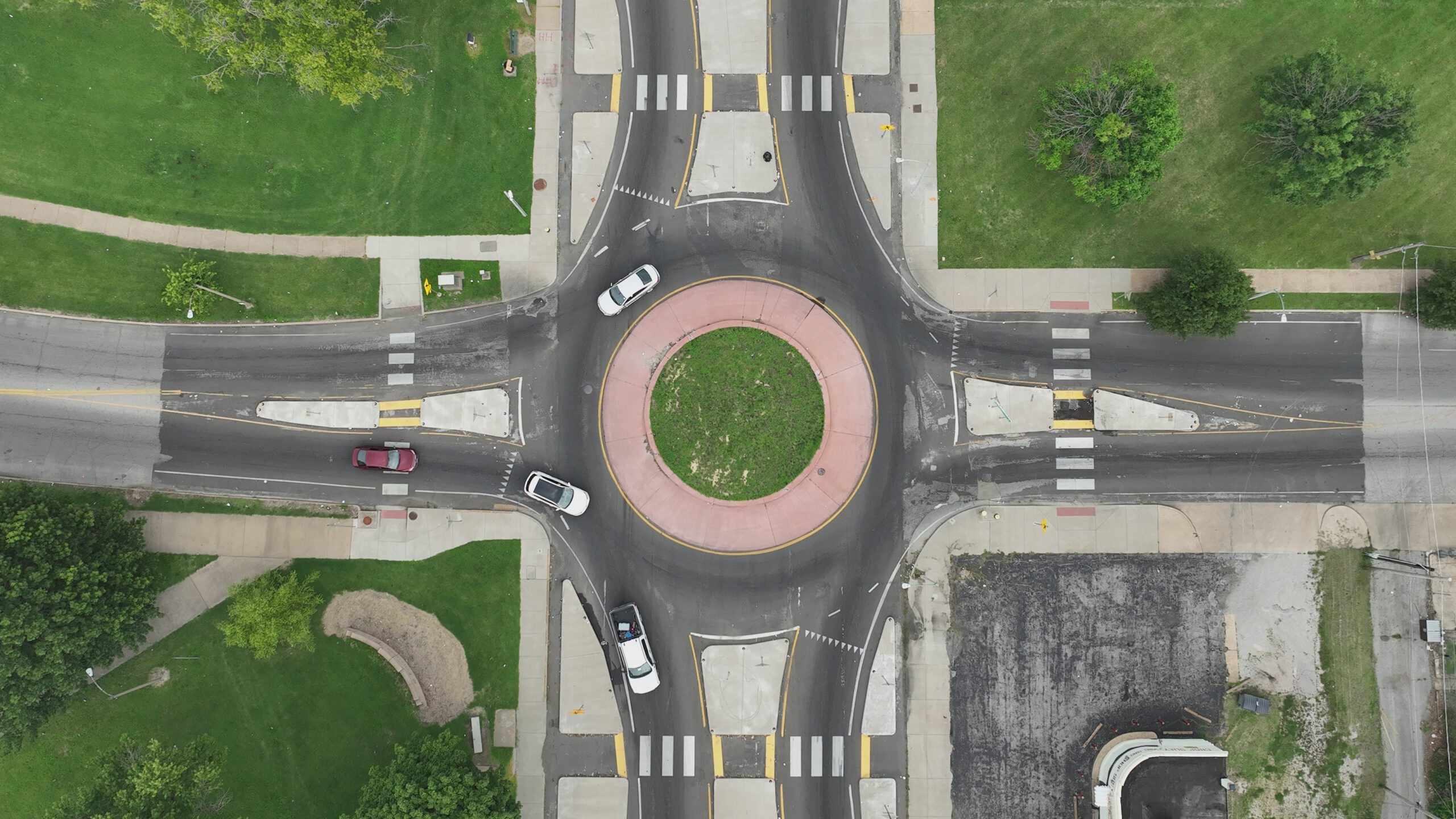
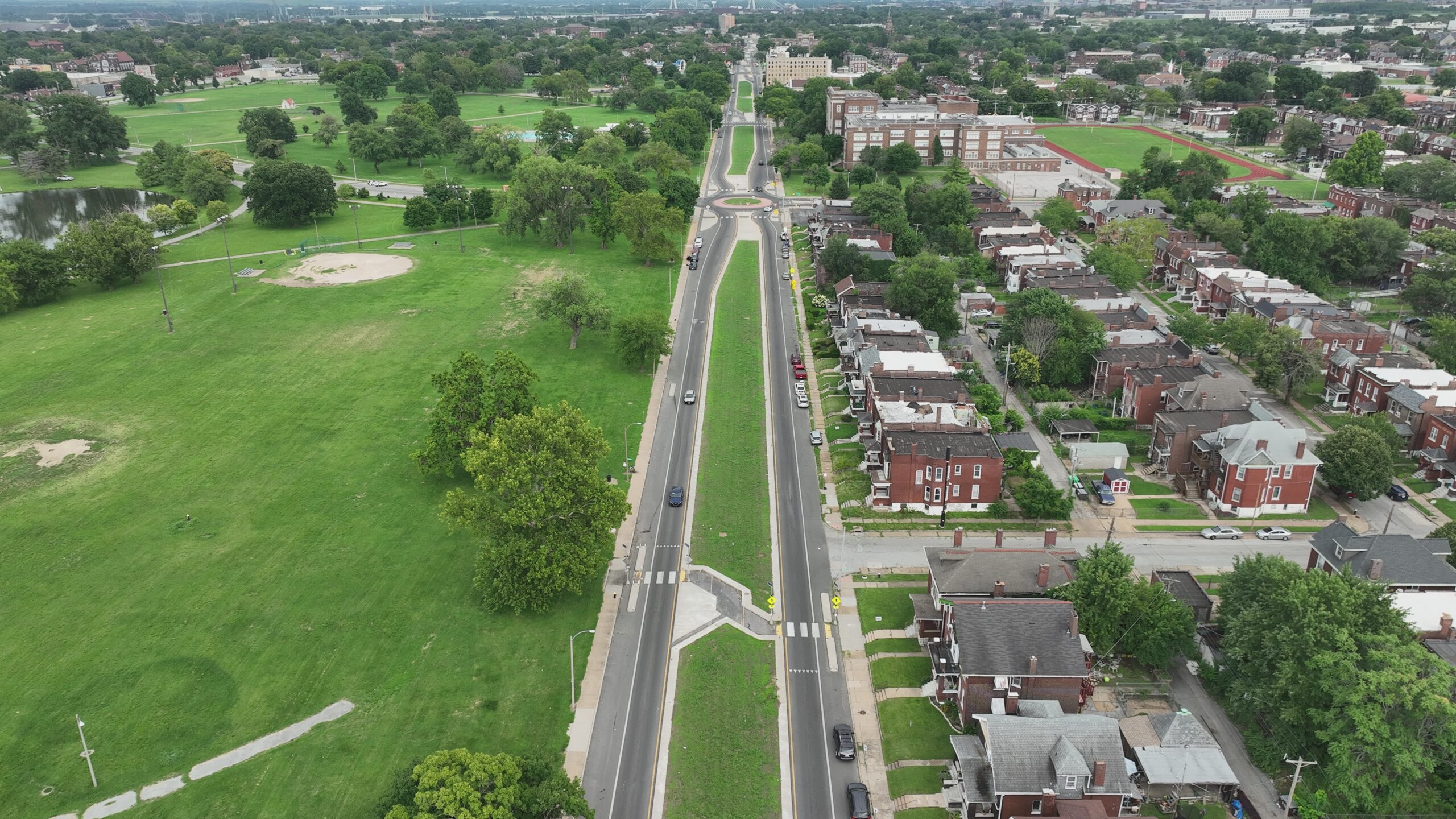
Once ranked among the nation’s highest-crash corridors, this stretch of Route 115 required a comprehensive, data-driven safety approach. TREKK analyzed crash data using roadway safety audits, heat mapping, and crash modification factors to identify high-risk locations and determine the most effective countermeasures.
Roundabouts were a key component of the final design, working alongside other traffic calming strategies such as a road diet, raised medians, improved pedestrian crossings, and enhanced signal timing. These improvements were designed to slow traffic, reduce conflict points, and create safer conditions for both drivers and pedestrians.
The results were immediate and measurable. Within one year of construction, crash rates dropped by more than 50 percent in areas with hardscape improvements. This project highlights how roundabouts, when paired with a comprehensive safety strategy, can dramatically improve corridor performance.
I-49 Outer Road Conversion – Grandview, MO
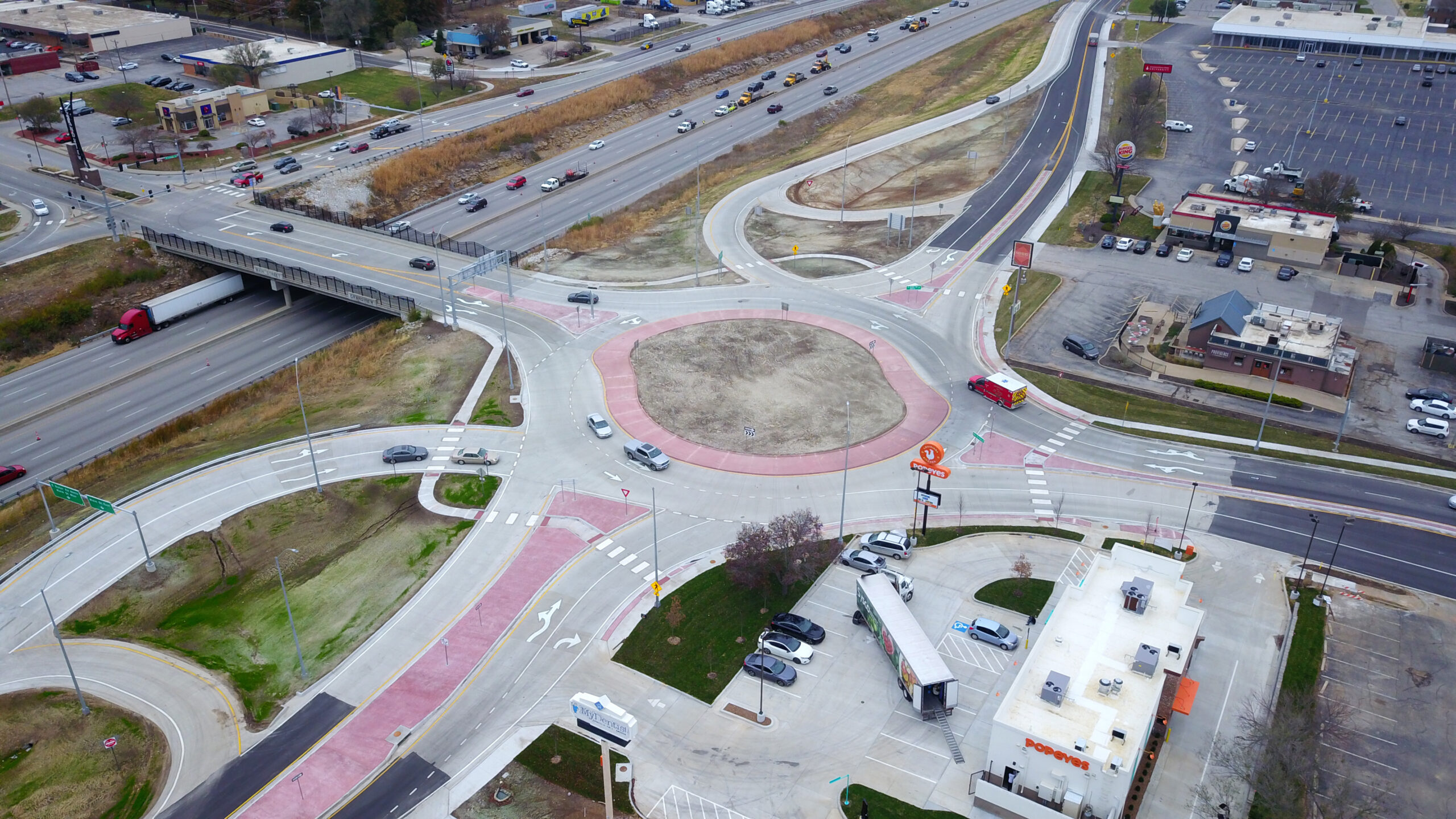
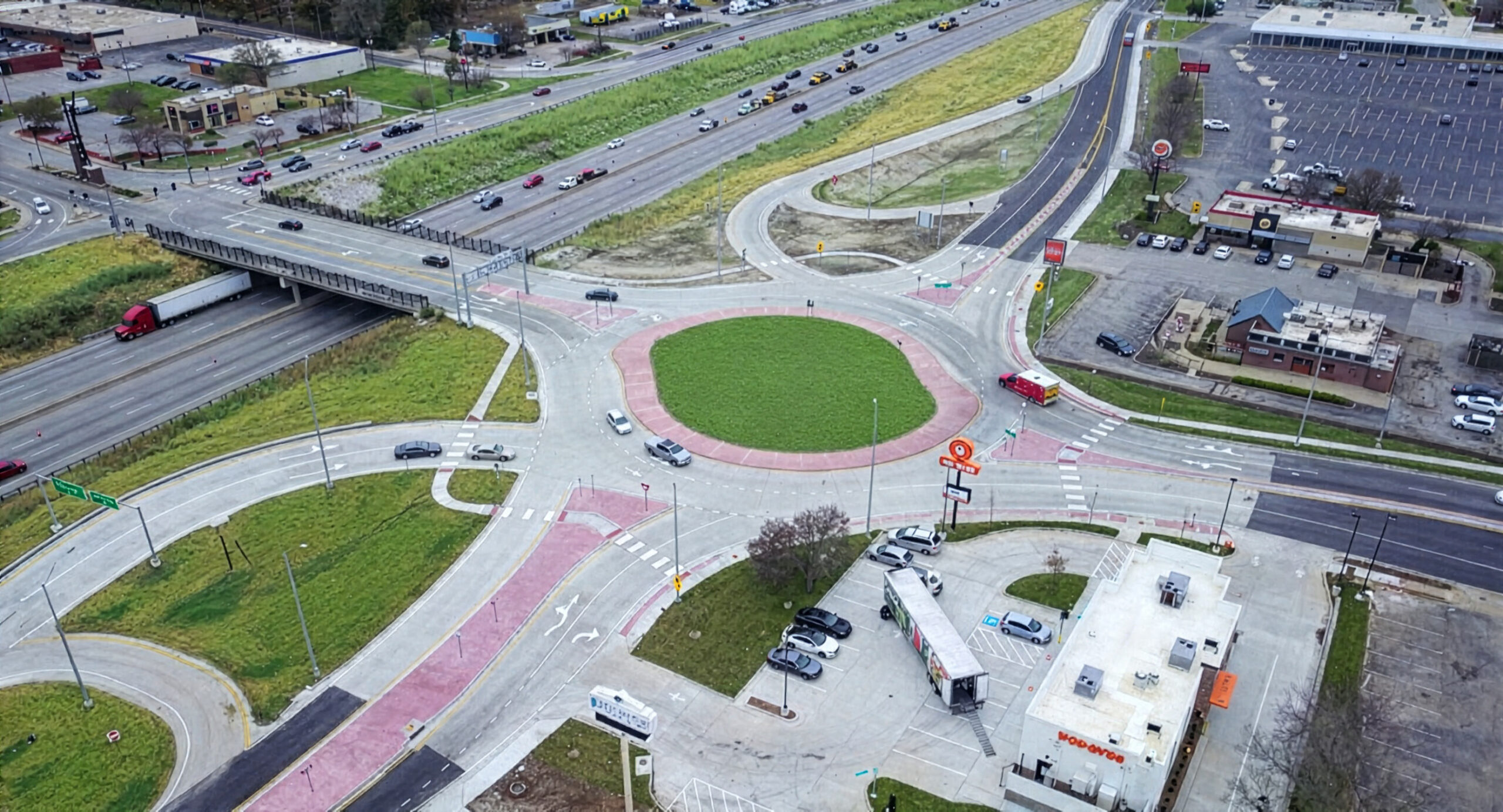
As part of a major design-build project in Grandview, TREKK helped convert one-way outer roads along I-49 into a two-way system to improve circulation and support future growth. Roundabouts were strategically incorporated to provide safe and efficient access between the interstate and local road network.
These roundabouts allow for smoother traffic transitions, reducing the need for signalized intersections and minimizing delays along the corridor. The project also included a turbo-roundabout design at Main Street, which enhances capacity and improves lane guidance for drivers navigating the intersection.
By integrating roundabouts with multimodal improvements, such as sidewalks, signage, and drainage enhancements, the project not only improves traffic operations but also creates a more connected, accessible corridor for all users.
Route 60 Corridor Improvements – Southwest Missouri
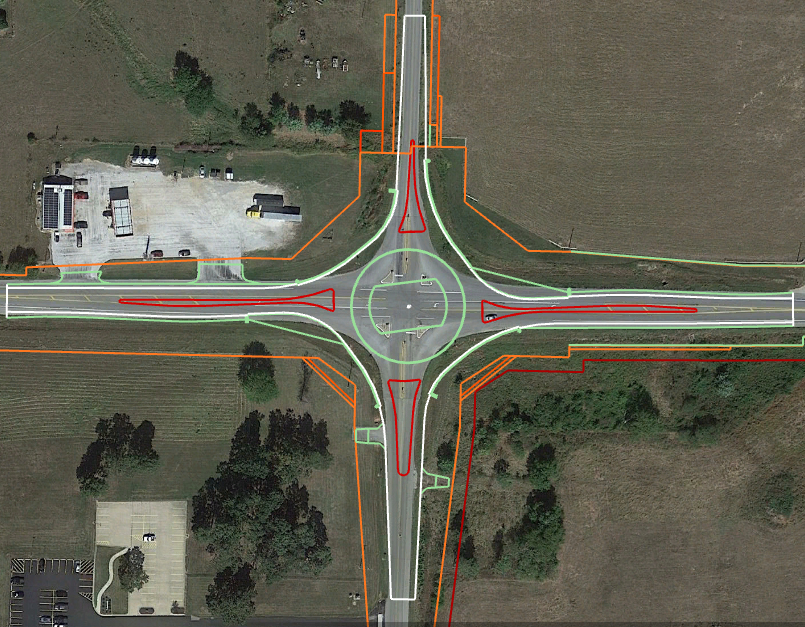
Along the Route 60 corridor, TREKK conducted a conceptual study of multiple high-crash intersections identified in MoDOT’s Southwest District Safety Plan. The corridor spans a significant portion of southwest Missouri and serves as a critical route for regional travel.
Through detailed analysis, TREKK recommended a combination of improvements, including turn lanes at several intersections and the introduction of roundabouts at key locations. These roundabouts are designed to improve both safety and efficiency by reducing delay, managing turning movements, and minimizing severe crash types.
As part of a larger corridor-wide effort that also includes resurfacing and intersection upgrades, these roundabout solutions will play an important role in creating a safer and more reliable transportation network for the region.
US 59 & US 169 – Garnett, KS
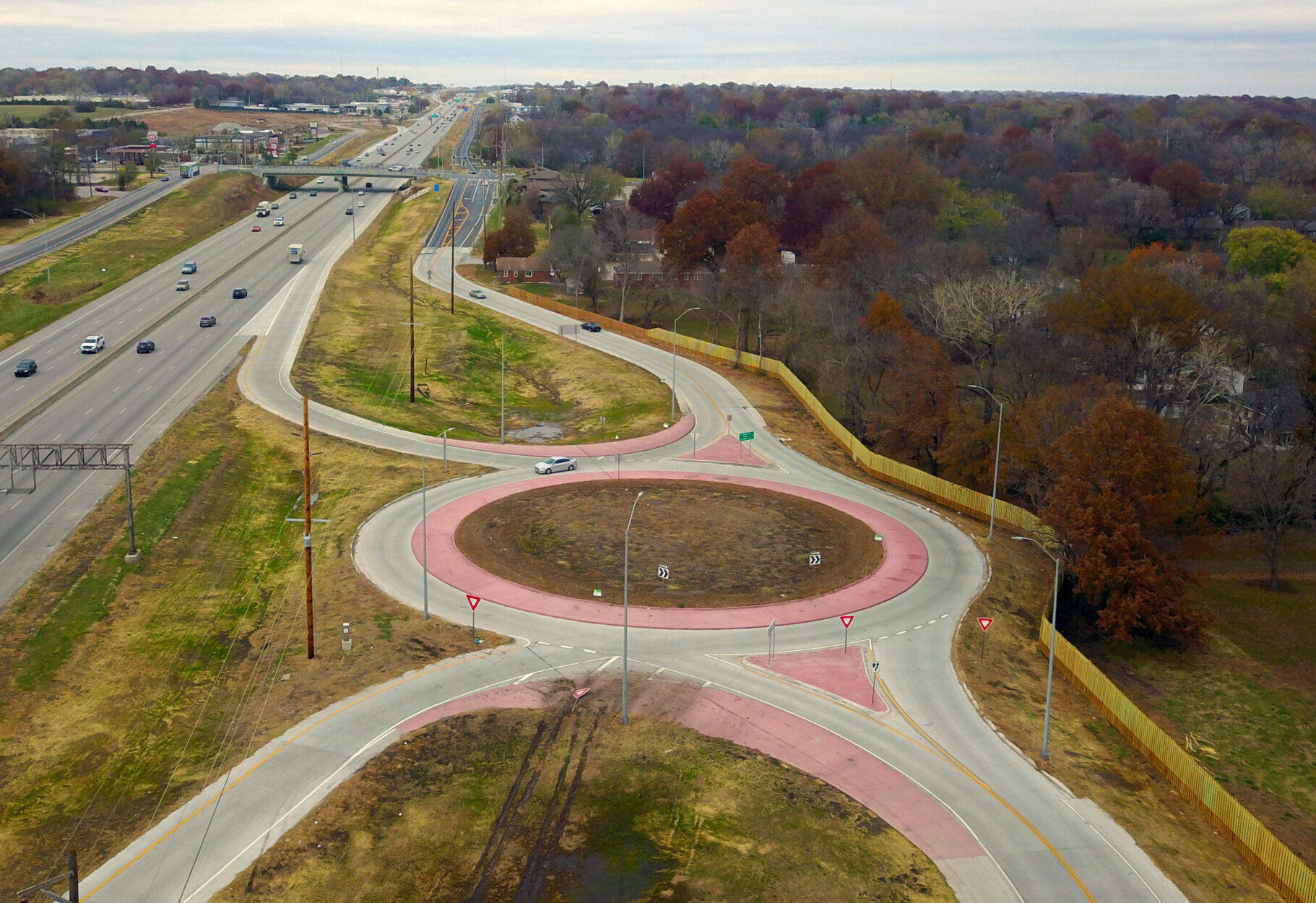
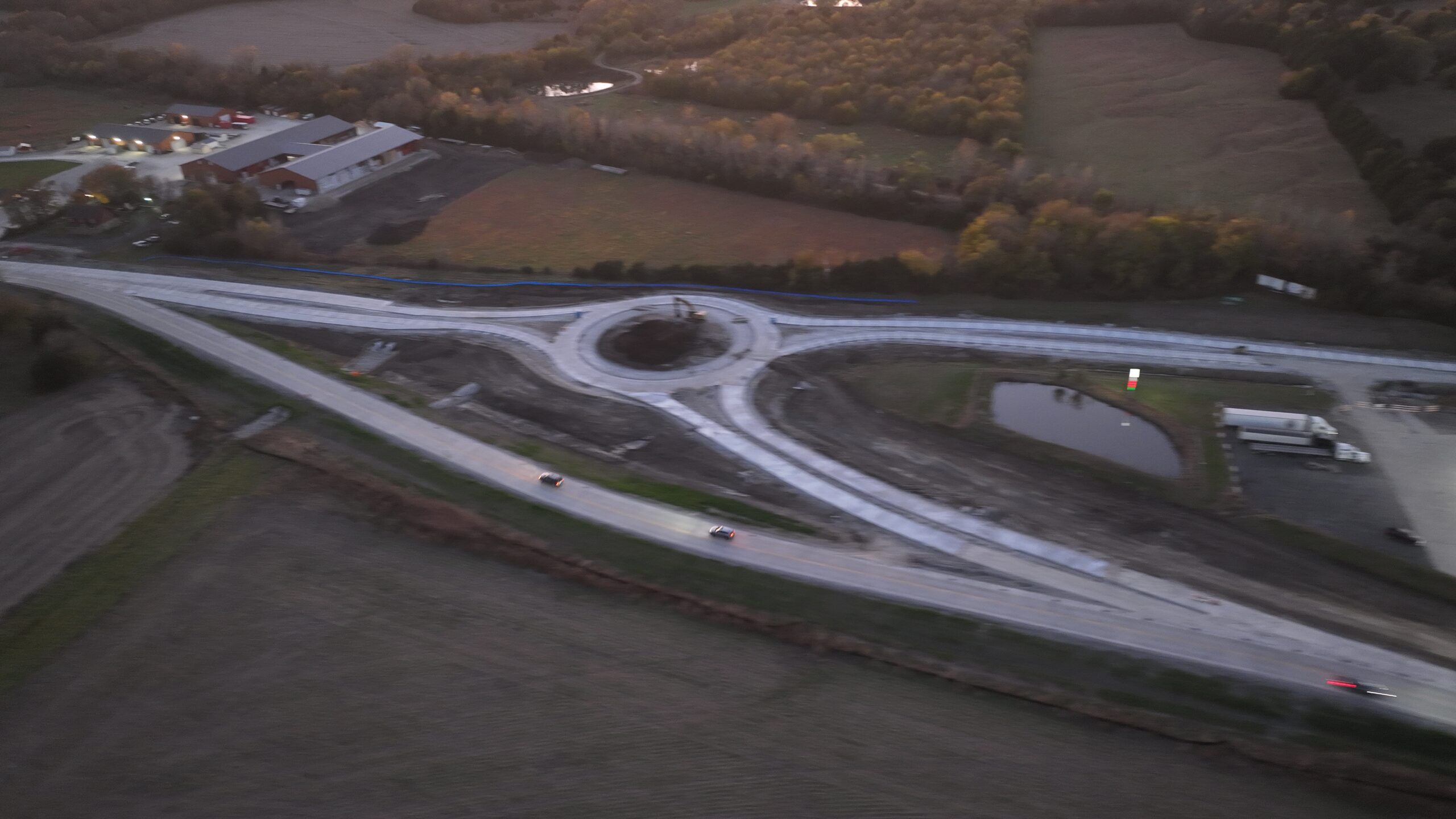
At one of Kansas’ first-ever roundabouts, TREKK evaluated an existing design with a history of crashes and high approach speeds. The team performed detailed traffic and geometric analyses, including fastest-path evaluations and cost-benefit comparisons, to determine the best path forward.
Rather than a full reconstruction, TREKK developed targeted design improvements that enhance safety while maximizing the value of existing infrastructure. The solution introduced reverse curves leading into the roundabout, which naturally slow approaching vehicles and improve entry angles. This resulted in better deflection and safer navigation for both passenger vehicles and trucks.
Construction was carefully phased to maintain traffic flow through the intersection, demonstrating how roundabout improvements can be implemented with minimal disruption while still delivering long-term safety benefits.
From high-speed rural intersections to dense urban corridors, roundabouts continue to prove their value as a flexible, scalable solution in modern traffic design.
Roundabouts aren’t just a design trend. They’re a smarter way forward.